Matrix Audio NT-1 Streaming Transport Review. Next level digital.
By Steve Huff
It’s interesting that when we talk about streaming transports within the audio hobby, some feel that streamers in no way can make a noticeable audible difference when playing your favorite digital tunes. I know it seems like this would be the case, but in my experience it truly is not. Sure, some streamers will sound similar (usually the budget models), but some that are crafted with the right engineering, parts, and software can indeed sound quite a bit better—and sometimes several levels better—when streaming your fave music from your fave streaming service.
The Video Review
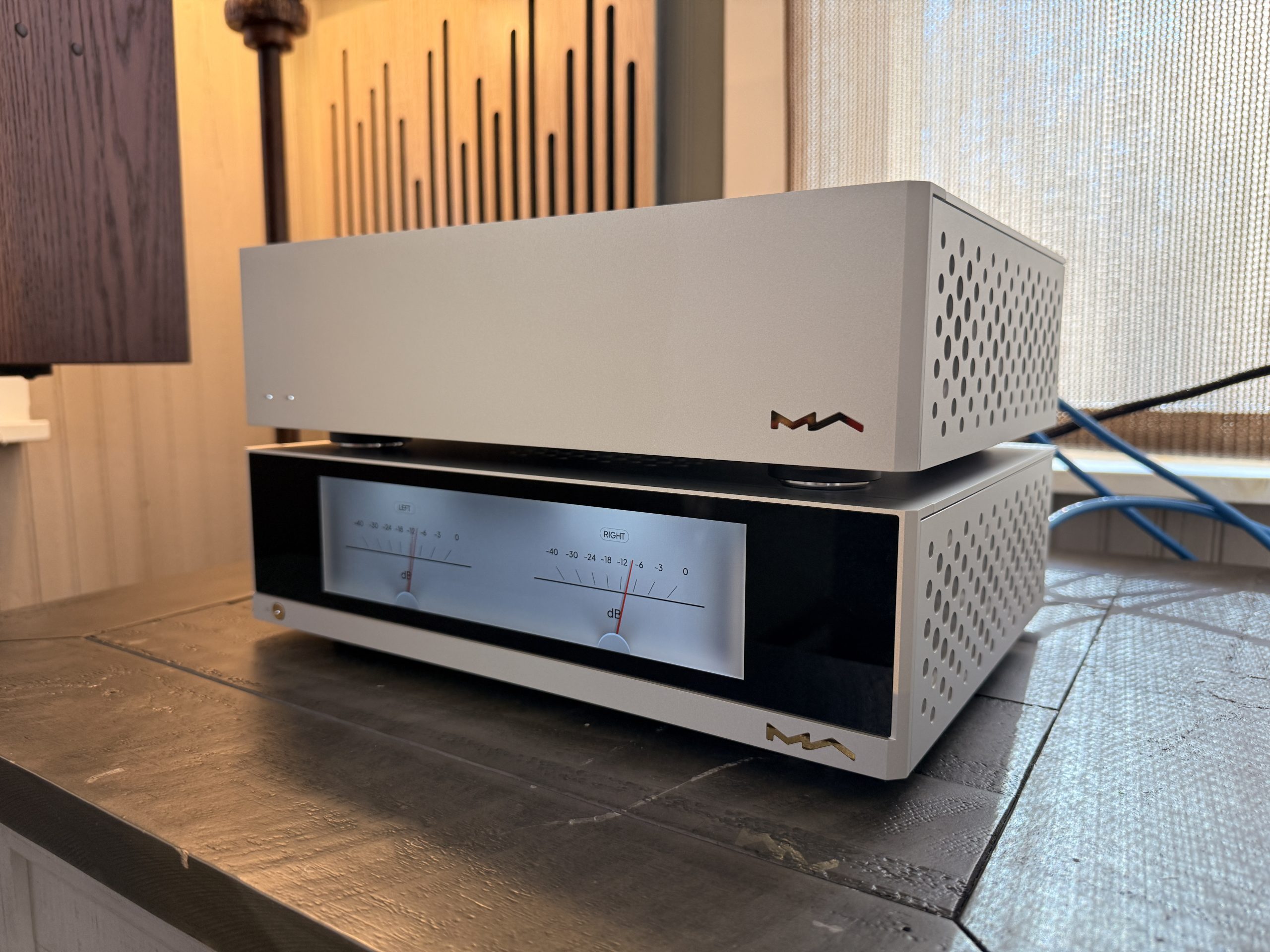
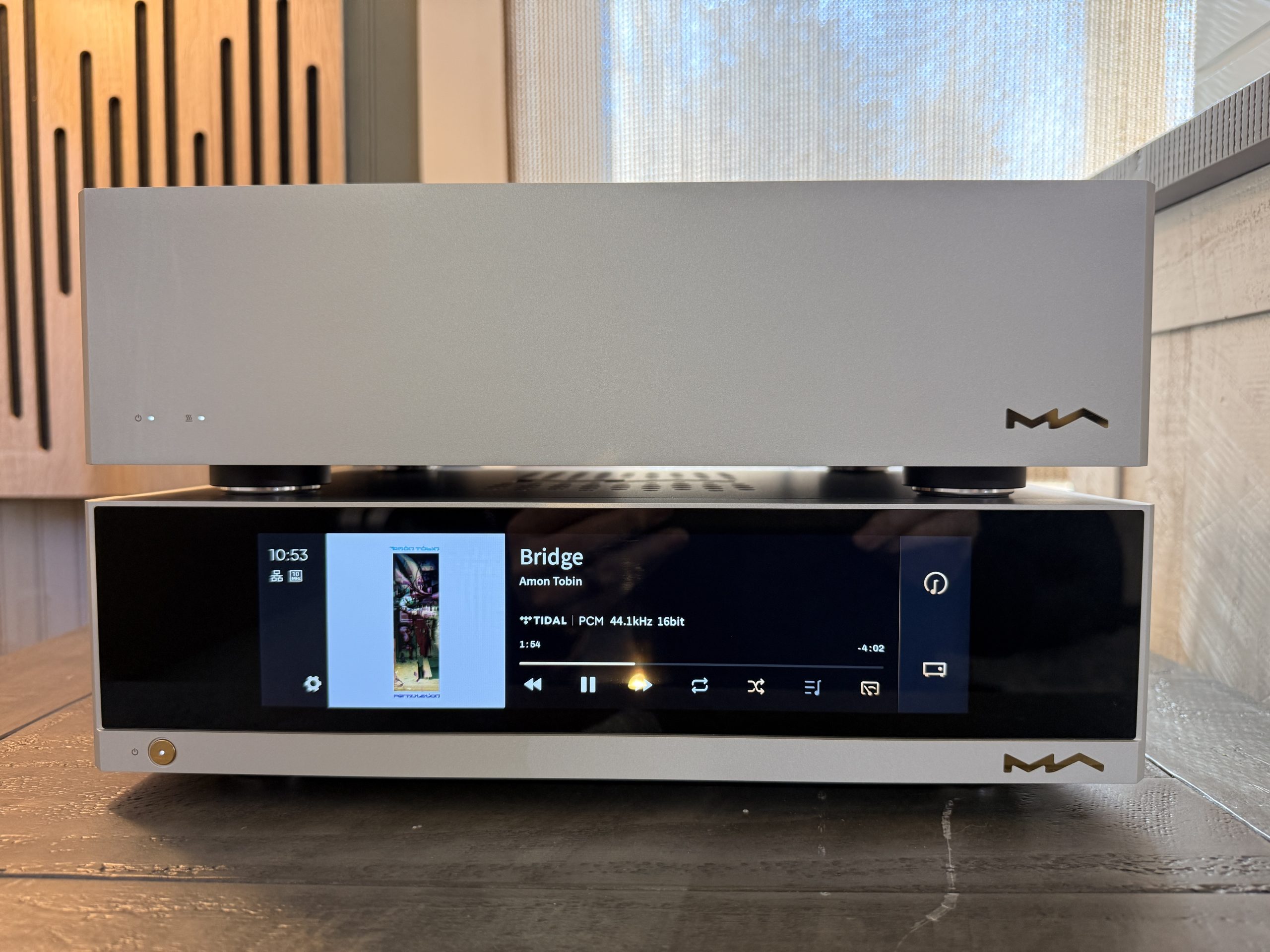
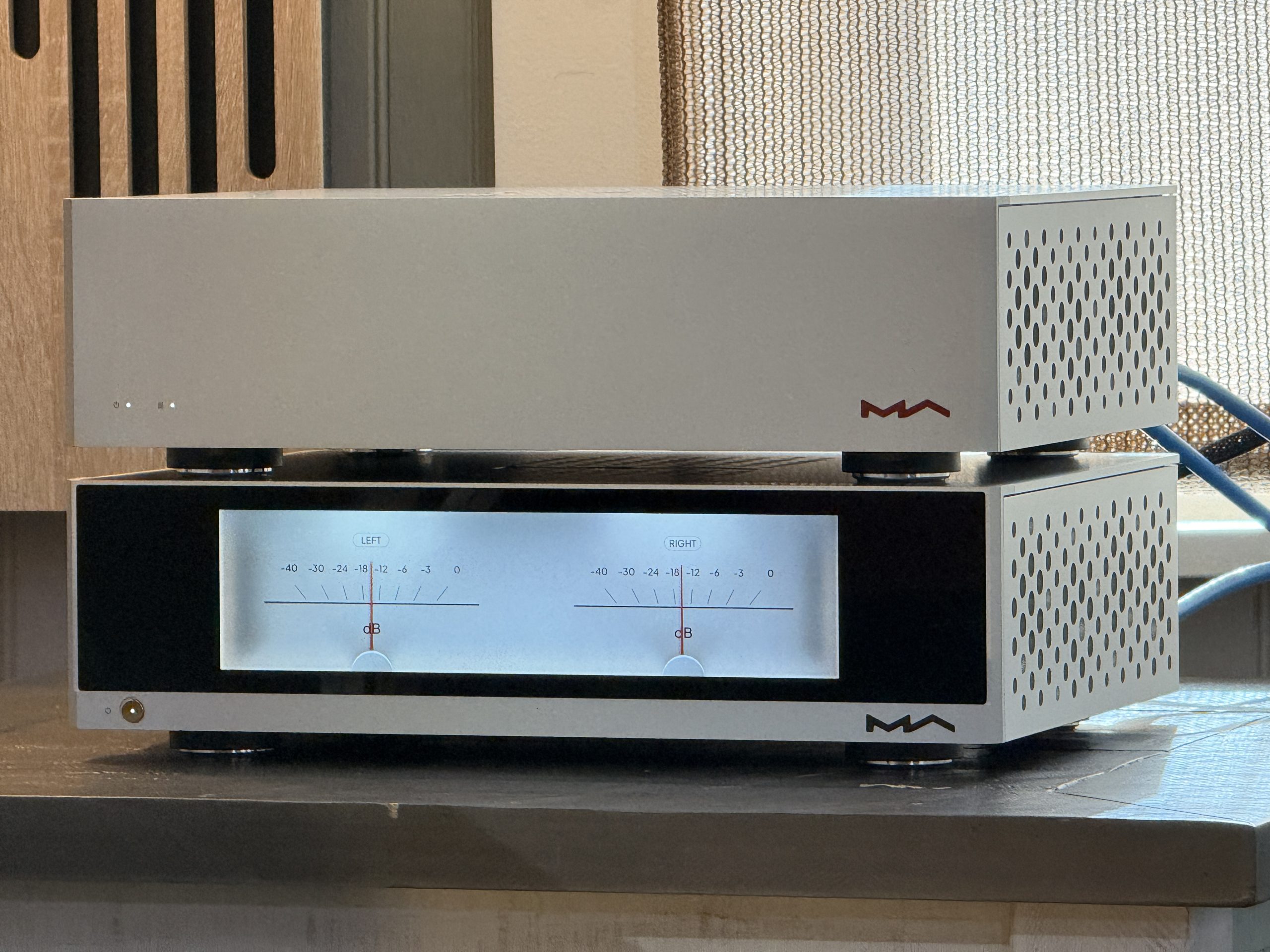
The Matrix NT-1 with SC-1 Clock
The streamer I am reviewing today is one such device, meant for this kind of listening. As I have said before, if you just want to fill a room with music while you chat with friends, play pool, or party, then any streamer or all-in-one will do the job to deliver music that fills the room. No need to get fancy for that. But if you want to enjoy the “sweet spot” every now and again and hear that holographic soundstage—or depth, layers, and texture to the music—then read on.
STREAMER or DAC? Which is more important?
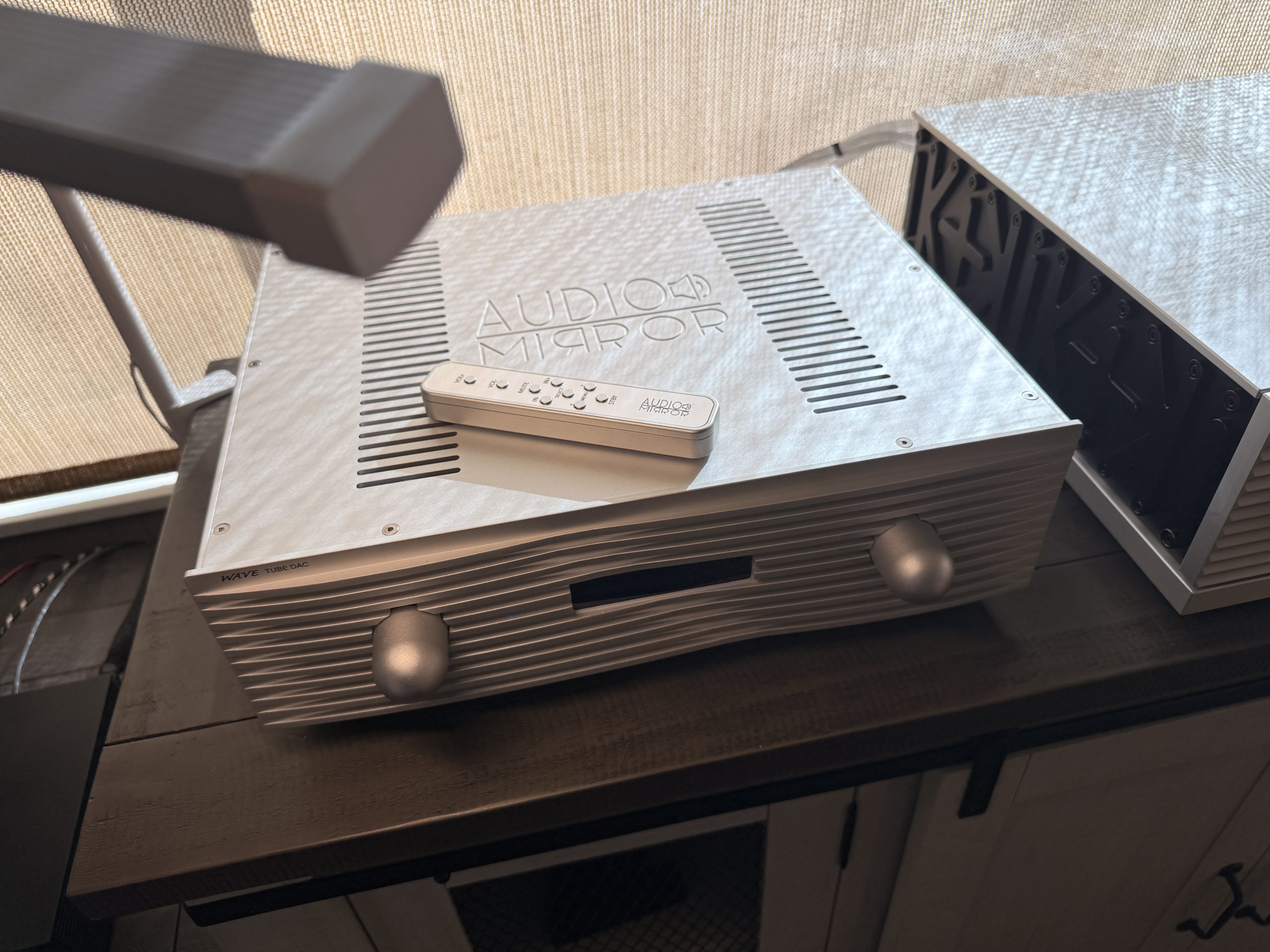
Out of the over 100 DACs I have heard, my pick for my all-time fave DAC (that truly blew me away and still does) is the Audio Mirror Wave Tube DAC. This DAC sits in what I call the “exotic” territory of price ($22k), but for me it delivers digital sound that is nothing like what most feel digital sounds like. It’s immersive, beautiful, and does a holographic soundstage like I had not heard until I heard this DAC. This DAC for me also bested a couple that were twice or thrice its price, but sadly it must be sent back to Audio Mirror soon as it is out of my league in the price department. Even so, it’s been amazing to have it here for the last couple of months.
After 40 years in this hobby I have learned that the SOURCE of your audio system is very important, second only to the speakers you choose. But there is more to the source of a digital music system than the DAC. For the DAC to send an analog signal to your amp, you will first need a streamer to deliver the digital bits and signal to the DAC. The streamer is something I used to think was less important than the DAC, but I will admit now, I was wrong. Today I feel it is just as important as the DAC, if not more so. I will discuss why in this review.
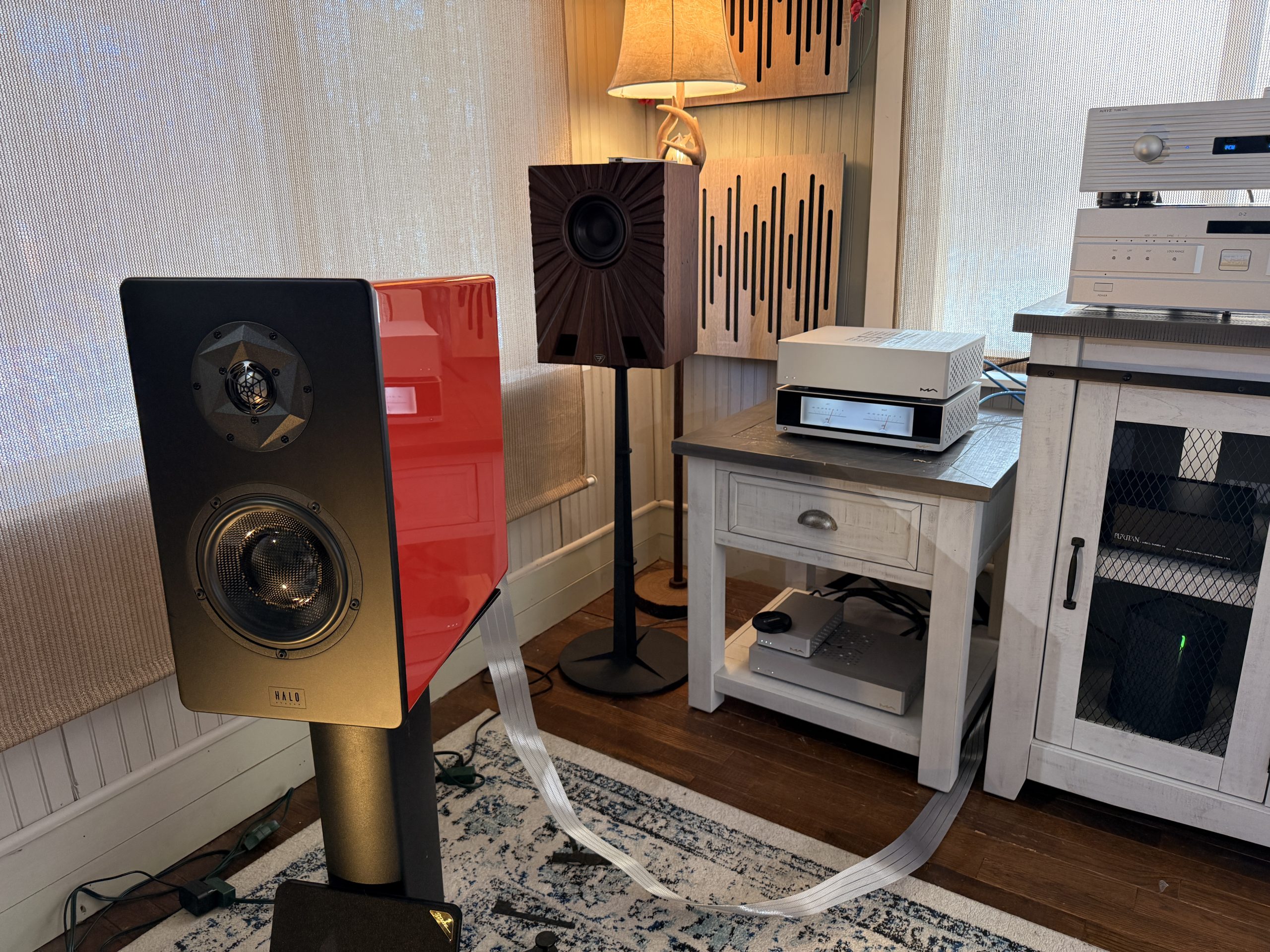
Visible here are the Starke Sound Halo M1 flagship speakers, the Fleetwood Helios, the Matrix NT-1 and SC-1, and the Audio Mirror Wave Tube DAC along with the SoulNote D2 MKII DAC. You can also see the SS1 Pro switch from Matrix with another small box, which is all part of what is making the streaming in this setup sound absolutely magical.
The Matrix NT-1 Streaming Transport is made for those who want the best digital sound.
In the case of the streaming transport model I am reviewing today, I was literally flabbergasted at the sound difference and immediate improvement it brought vs the Eversolo T8 I was using for a while, into the same DAC. While I have not tested one hundred streaming transports, I have heard around a dozen of them ranging from the pricey Grimm MU1, the affordable Eversolo T8, the mid-level HiFi Rose RS130, and the Lumin U1/U2 and U1/U2 Mini—plus quite a few more, including a few I chose not to review as I thought they were subpar vs the competition. My past faves have been the RS130 and Lumin U2, and they sit in the $6k price bracket. Both of these are beautiful and unique in their own way and deliver superb sound quality and refinement, no doubt.
There are many streamers out there in the wild, and prices on these music makers vary wildly from $99 to as much as you want to spend. Let me be clear though: in this review I will be speaking on “streaming transports” vs the all-in-one boxes that feature a streamer and a DAC. A transport is just that: a streamer without a DAC built in, designed to deliver the purest signal into a DAC of your choosing.
Even so, it’s pretty awesome that today we have solutions in transports and all-in-one boxes that are truly good and allow most anyone to get into streaming high quality music. While streaming even a decade ago was not to the level of the best analog setups, these days I will argue that it is—and it actually can surpass vinyl for a few reasons, including sound quality. Blasphemy, someone says! Well, it all depends on how serious you are about digital and how far down the rabbit hole you want to go. Streaming has now matured and can sound downright incredible—or downright great—depending on the level of sound, immersion, refinement, and magic you seek.
Why Stream?
With streaming comes many benefits, such as discovering new artists with ease and having millions of songs at your fingertips to play at your whim. For me this means no more spending $50–$100 on a new quality album pressing with 8 or 10 songs—and having to clean them and store them properly. While I love the idea of vinyl and own quite a lot of records from my youth as well as the last couple of decades, for me I much prefer to stream in a critical listening setup.
It’s easier, it can be less expensive, and it allows me to hear much more music and find artists I would have never found. It’s also hassle free. I get it—vinyl is cool and retro—but I checked out when decent pressings started costing $75 a pop or more. Sure, there are used records and this is cool and makes it easy to grab records you may enjoy for a great price. I love this as you can get them on the cheap, but records take up space and weigh a ton when you have many of them. I once had 1500 records and these took up quite a lot of space in my home at the time. Moving them? Arg. As I get older I like “easier”, and as much as I would LOVE to own this beauty of a table, it too would bring me down a very pricey rabbit hole that I can not afford.
In the audio world some will always prefer vinyl and some will always prefer to stream. I choose to stream these days for my main system, but I have nothing against vinyl if someone wants to enjoy good old fashioned records. I do have a small second system that is set up just for vinyl and it set me back a total of $5k for the table, amp, and speakers. We enjoy it sometimes, but I love to stream for reasons of discovery, sound quality, immersion, and ease of use.
The box below sells like hotcakes and is a superb entry lane into streaming, and this one even has an amp. It looks cool, sounds good, and works flawlessly most of the time. It’s also affordable, but this is an all-in-one with streamer, amp, and DAC in one box. While it doesn’t have the magic or refinement of the NT-1 and external DAC, it’s a great starter piece for those who want to see what streaming is all about. Just add speakers.
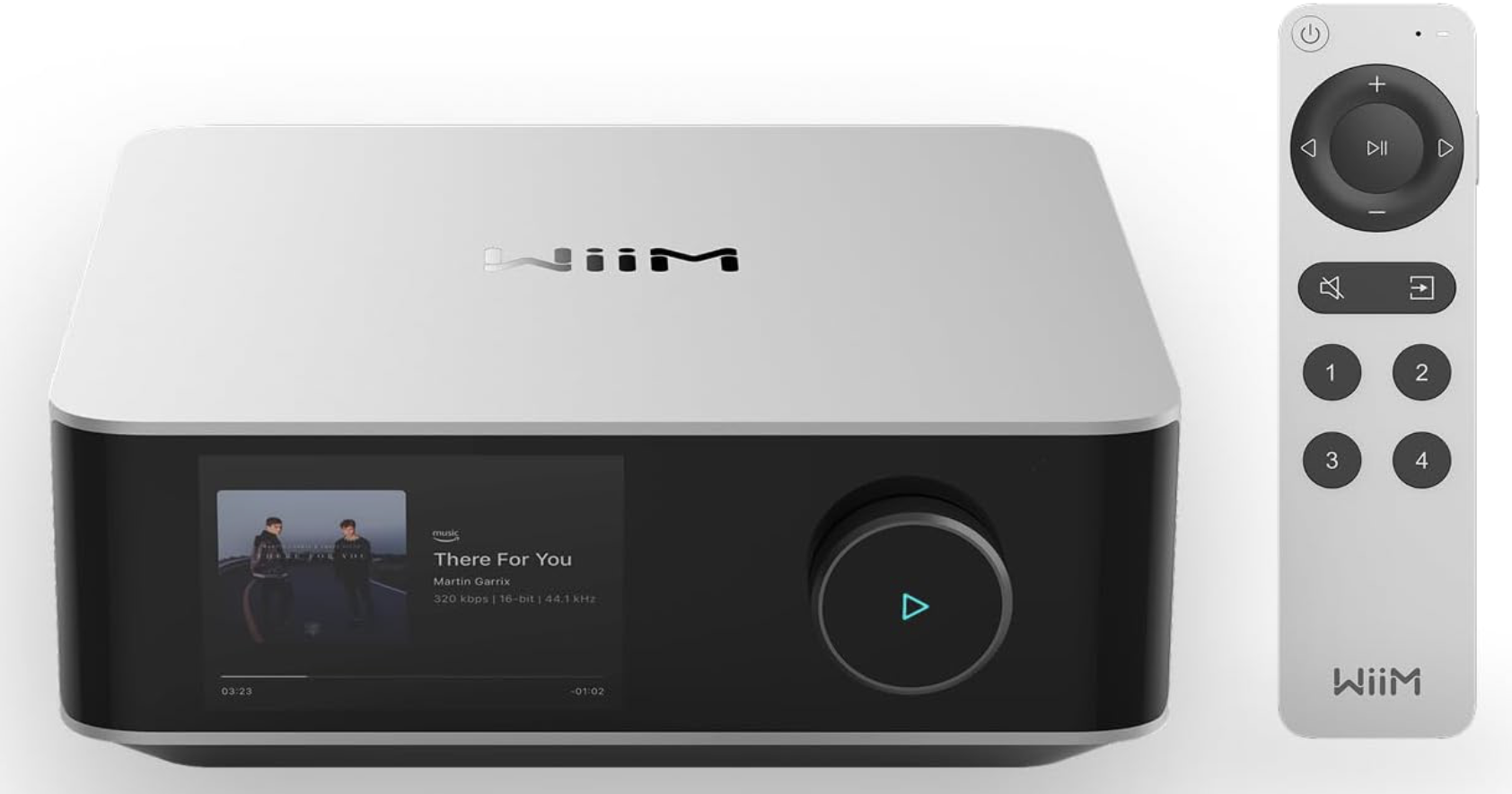
Super Good Quality Streaming is now accessible to ALL
These days the streaming-curious masses have been buying up the all-in-one low cost Wiim Ultra streamer and Wiim Ultra amp (above). These boxes allow one to get into digital music streaming for a few hundred dollars and they include it all—from a built-in streamer to an included DAC—all the way to a display screen that shows the album artwork. Many ask…WHY PAY MORE?
I own a Wiim Ultra streamer and a Wiim Ultra Amp myself. I also have an Eversolo T8 streaming transport at the time of this writing, which costs four times as much as the Wiim Ultra yet doesn’t even have a DAC; it just streams into an external DAC you must purchase separately.
The subject of this review, the Matrix NT-1, costs $3999 and does not include a DAC—yet this is the one I chose for my reference system, to keep and to build on. Why pay more? Well, there are many reasons, but for me it is build quality, parts quality, performance, app, features, and sound quality—which stands above all else. The NT-1 and an external DAC is leagues better in sound, refinement, soundstage, depth, layers, texture, and well…everything vs the Wiim starter box, but it costs thousands more—hence being for those who want to set up that sweet spot for listening.
Some streamers, most of them, have a built-in DAC so they act as an all-in-one streaming solution like the Wiim, and these are perfect for the casual listener who just wants to play music and discover new tunes without hassle or spending a fortune. Again, great choices—and what one goes with depends on their wants and needs. There are no “bad” choices here really, but choices that you decide on due to your wants.
The Wiim is great indeed, but those who want the ultimate in sound quality, build quality, and even experience will want more. I am in that camp, and today I use a streaming transport that brings with it a lot of benefit for those who seek the best sound, immersion, and emotional connection. If this is you, then this is indeed the way to go.
A streaming transport is what I will be talking about today, the Matrix NT-1, and boy is it a stunner. In fact it has become my all-time favorite streamer due to cost, performance, and style—now besting my old faves for my tastes, though “besting” is a strong word. It’s more “differences”.

My Background
I have been in this hobby for 40 years now, since I was 16. I was infected by the audio bug back then in the mid 80’s when the hobby was pretty easy to get into. Just a 16 year old kid who managed to acquire a system that got used—and sometimes abused—daily. It lasted through my upper teens and early 20’s as my speakers were used as tables to hold beers, sodas, or whatever drinks we had that my friend and I smuggled into my room, lol. Those were the days, and I feel so lucky to have lived in that time when things were just more chill in the world. And yes, I am Gen X—the generation of calm, cool, collected. I bought one new record every week and listened to it over and over until the next week when I bought another.
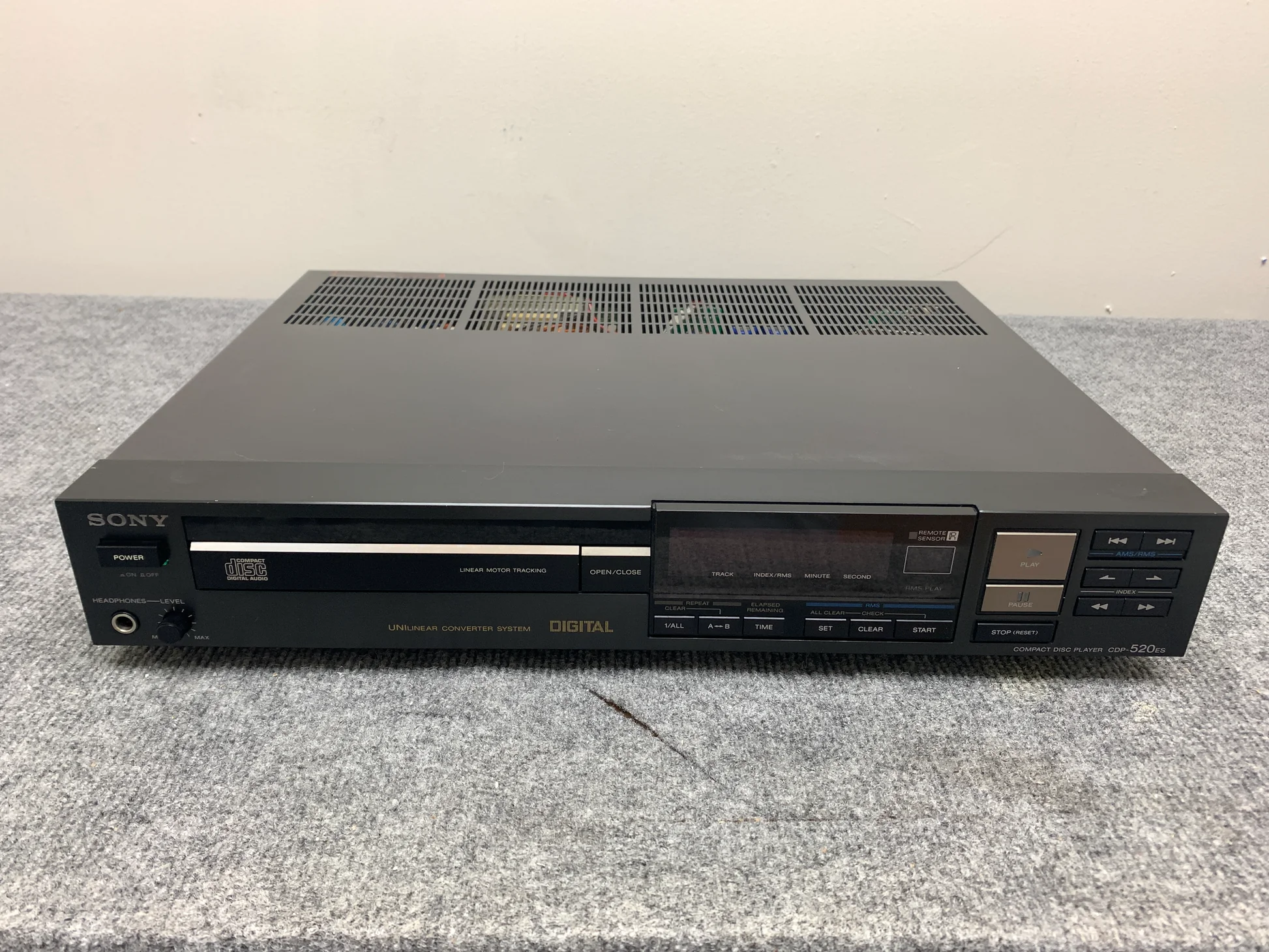
Back then though there were no such things as a streaming transport of any kind. You had an amp, speakers, and a turntable, which was your “transport”. When CD hit I of course had one of those, but I had to wait a few years to get one for Christmas. And yea, it was a cheap model, but I loved it. It was a Sony—nothing fancy by today’s standards—but back then I thought I had the best system ever. Didn’t we all? Back then no one spoke of how good a DAC was as that wasn’t a thing. Yea, there were DACs inside of the CD players, but not like today where these things get over engineered while seeking perfection in digital sound.
Over the last 40 years I have almost just about tried it all and have scaled the audio wall to great heights—spending money, losing money, and going from low to mid to high end in price and back down again. Today at 56 I am still a bonafide audio addict, and while my wife and I live super simple in a small 1200 SQ ft house in the woods, we both enjoy music so, so much. It’s part of our life every single day and we much prefer this to taking lavish vacations, attending crowded concerts, or buying fancy jewelry or whatever.
We live so remote we are far from pretty much everything—even a store, a gas station, or a hospital. We haven’t been to a mall in 6 years (there is one two hours away, one way), nor a theater. We are homebodies and stay home with our animals and just enjoy the peace and quiet, as well as the work and responsibilities we have every day here. We exercise, we listen to music, and sometimes watch our fave shows. We work on our property, cut trees down, and rescue stray dogs and cats that wander in. We feel this helps keep stress away, and it does.
My wife and our dogs coming back from the vet as she always sat in the back with them. The two dogs on the right both passed during the writing of this review. They are missed dearly. One had cancer, the other heart failure.

The moral of my story here is that over the years I have been able to test all ranges of streamers and DACs, as well as amps, speakers, and accessories, in all price ranges. It has always been the case here that once I have a fantastic front end in place—or source—almost any speaker I hook up to it can sound incredible. I have speakers here now that range from $500 to $25,000 (review units, loaners, and owned), and with the way I set up the streaming side of things I could live with any of these speakers—even the $500 models, which sound so good with the setup I will talk about here. This includes the Matrix NT-1 streaming transport, the Matrix SC-1 Clock, the Matrix SS1 Pro Network Switch, along with whatever DAC I am using at the moment. Today it is the Audio Mirror and the lovely and new SoulNote D2 MKII.
If you want digital that surpasses high end analog, here ya go.
While you do not have to go to crazy lengths such as this to get amazing streaming, the NT-1 alone did make a huge difference vs the T8 I had in place before it. Once I heard the NT-1 on its own I was hooked—and I mean instantly. I remember the first songs were giving me goosebumps. I was in disbelief at how much richer, deeper, and more soulful the sound was. Maybe it was synergy or maybe the NT-1 is special. I have had it here for many, many weeks now and listen daily.
I have owned (as in purchased) my share of transports such as the Lumin U2 ($6k), HiFi Rose RS130 ($5900), Eversolo T8 ($1300), and today I am all in on the Matrix NT-1 ($3999).
The Audio Mirror WAVE DAC
The Others
I will state that I absolutely loved the Lumin U2 as it has a nice full-bodied sound with a nice organic and analog-like flow. It is just a solid, refined performer with awesome, beautiful, and unique build. The HiFi Rose RS130 is also superb and built to a superb high-end level like the Lumin. The Eversolo T8 has the most generic looks—a small black box—and the sound is excellent, but not as refined or quite as nice as the two others I mentioned. I have also heard an Aurender streamer recently that was quite good, but was not able to keep it for more than 2 days so no review.
The Eversolo T8 sits atop the Matrix NT-1
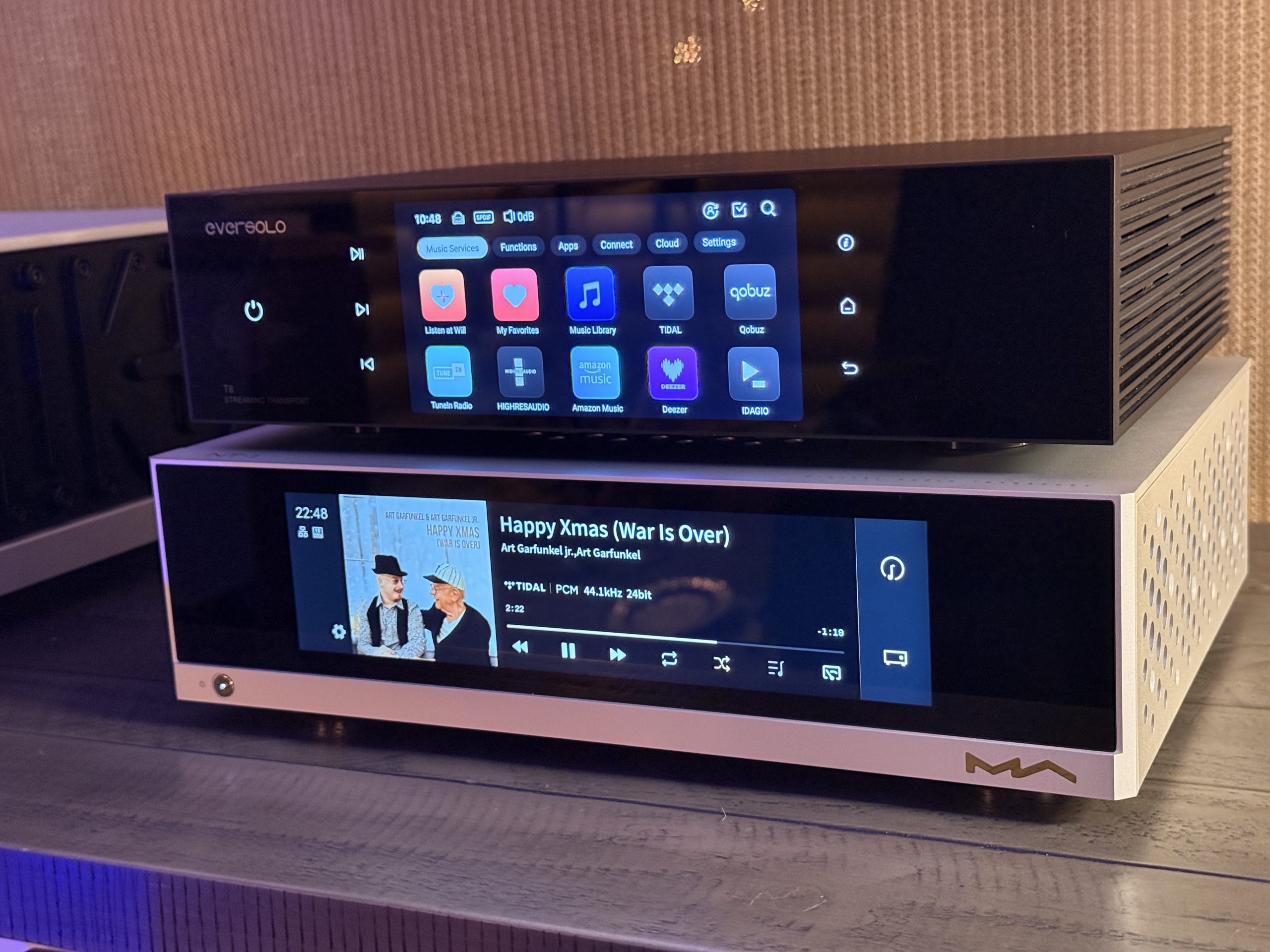
OK..before I get ahead of myself here with sound quality impressions, let us first talk about the features and benefits of a transport like the NT-1.
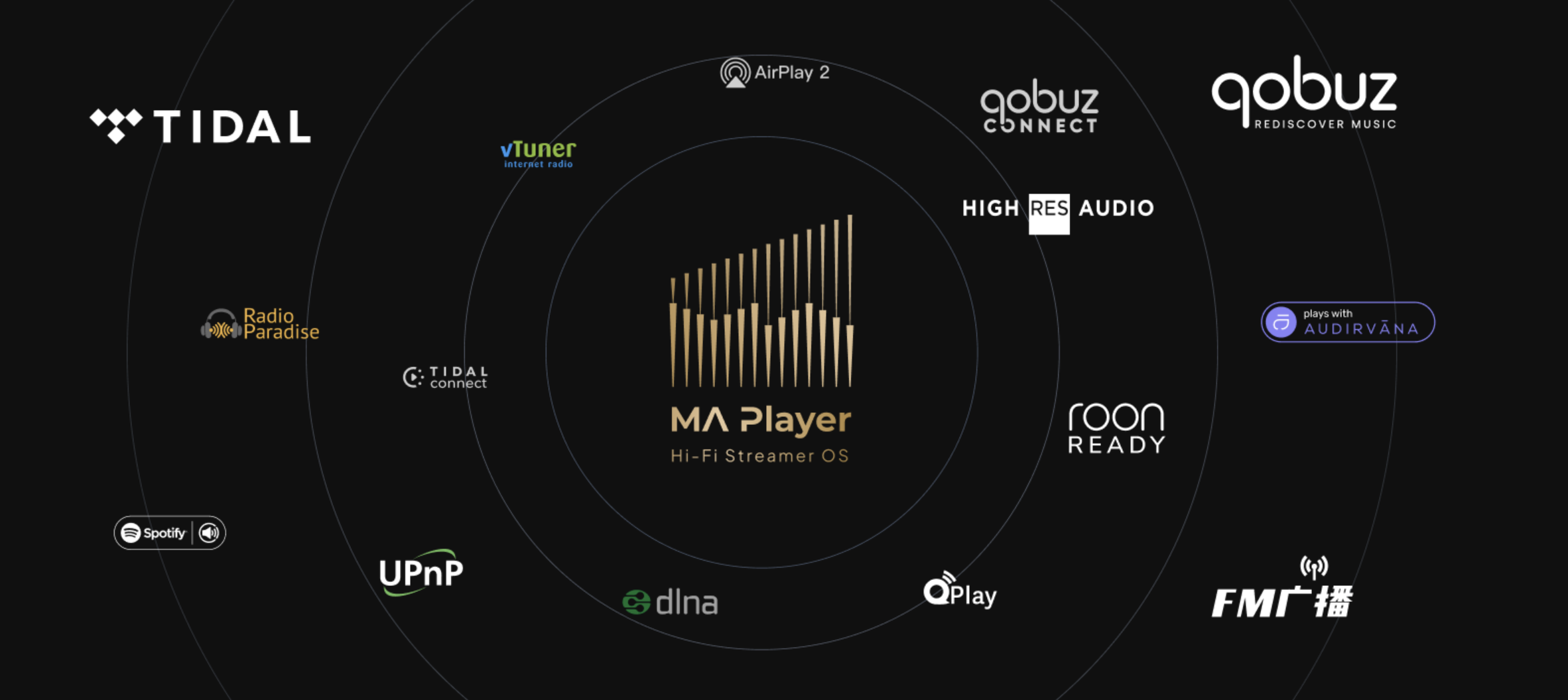
The NT-1 is compatible with Roon, it does TIDAL Connect, Qobuz Connect, Spotify Connect, AirPlay, and well…just about everything you can imagine wanting to stream. This is one transport that sounds amazing with Spotify Connect Premium as well. Also, you can enter your credentials from your fave streaming service into the NT-1 app, which is called “MA Remote”, and play direct from there for the all-out best sound quality.
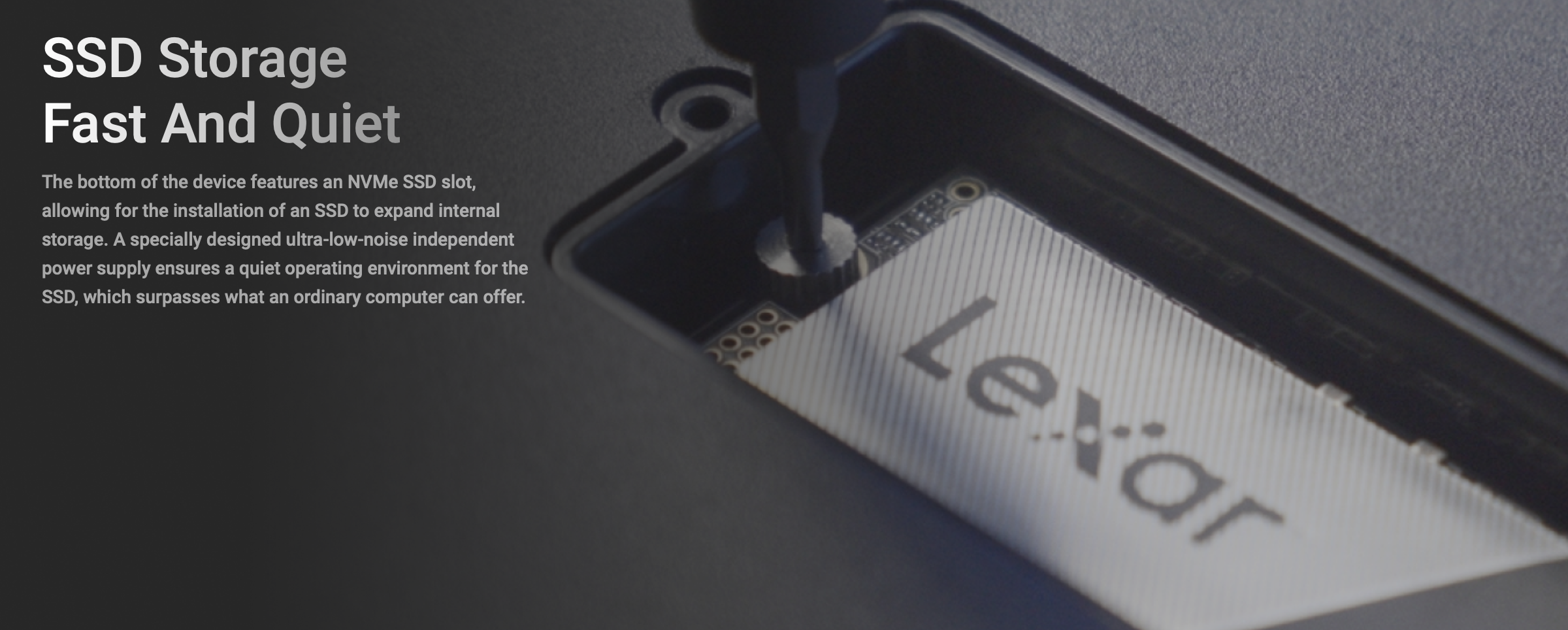
The NT-1 also has a space to add an SSD drive, so if you have music on a drive you can serve it with the NT-1 using the MA Remote app.
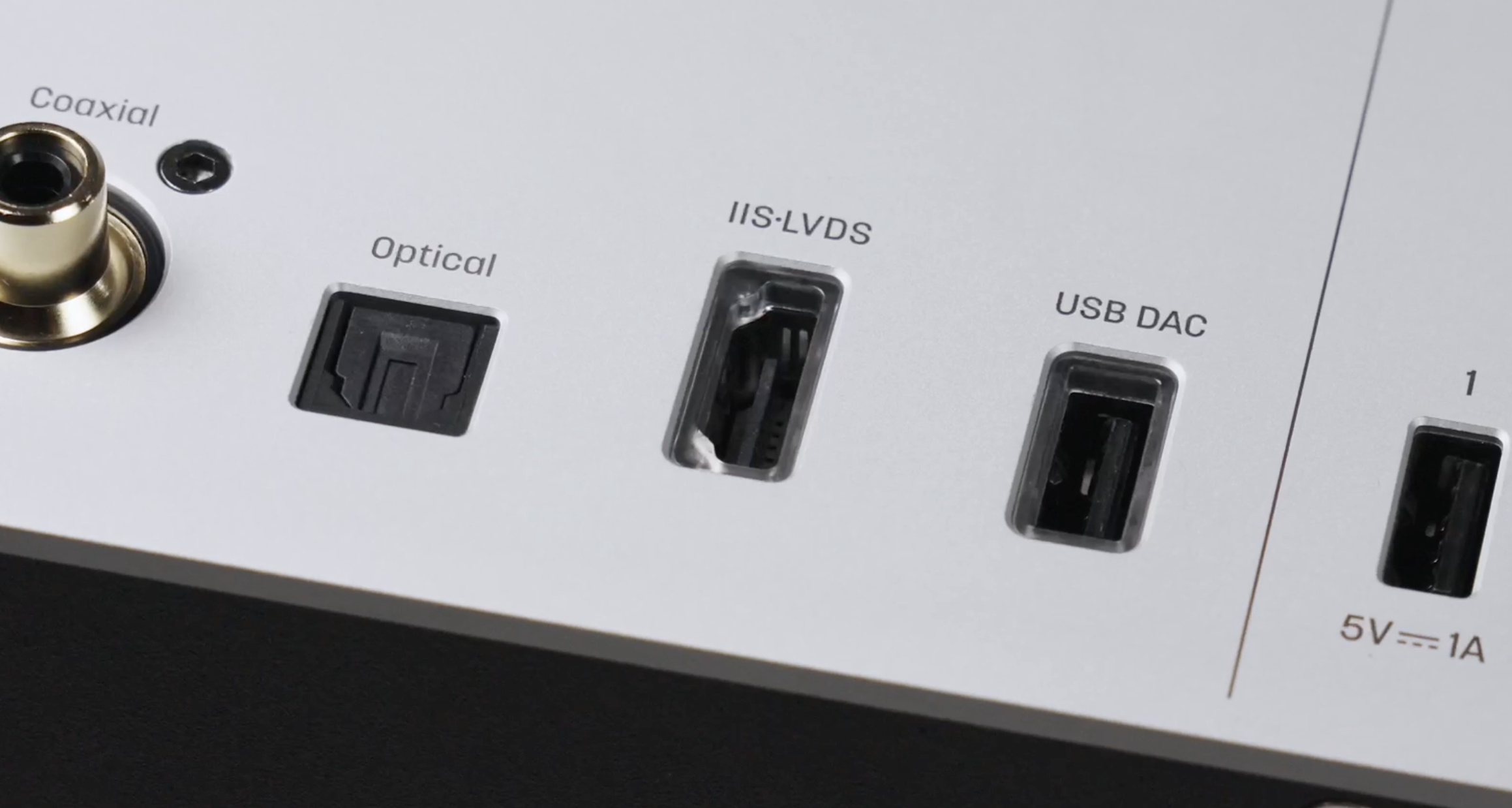
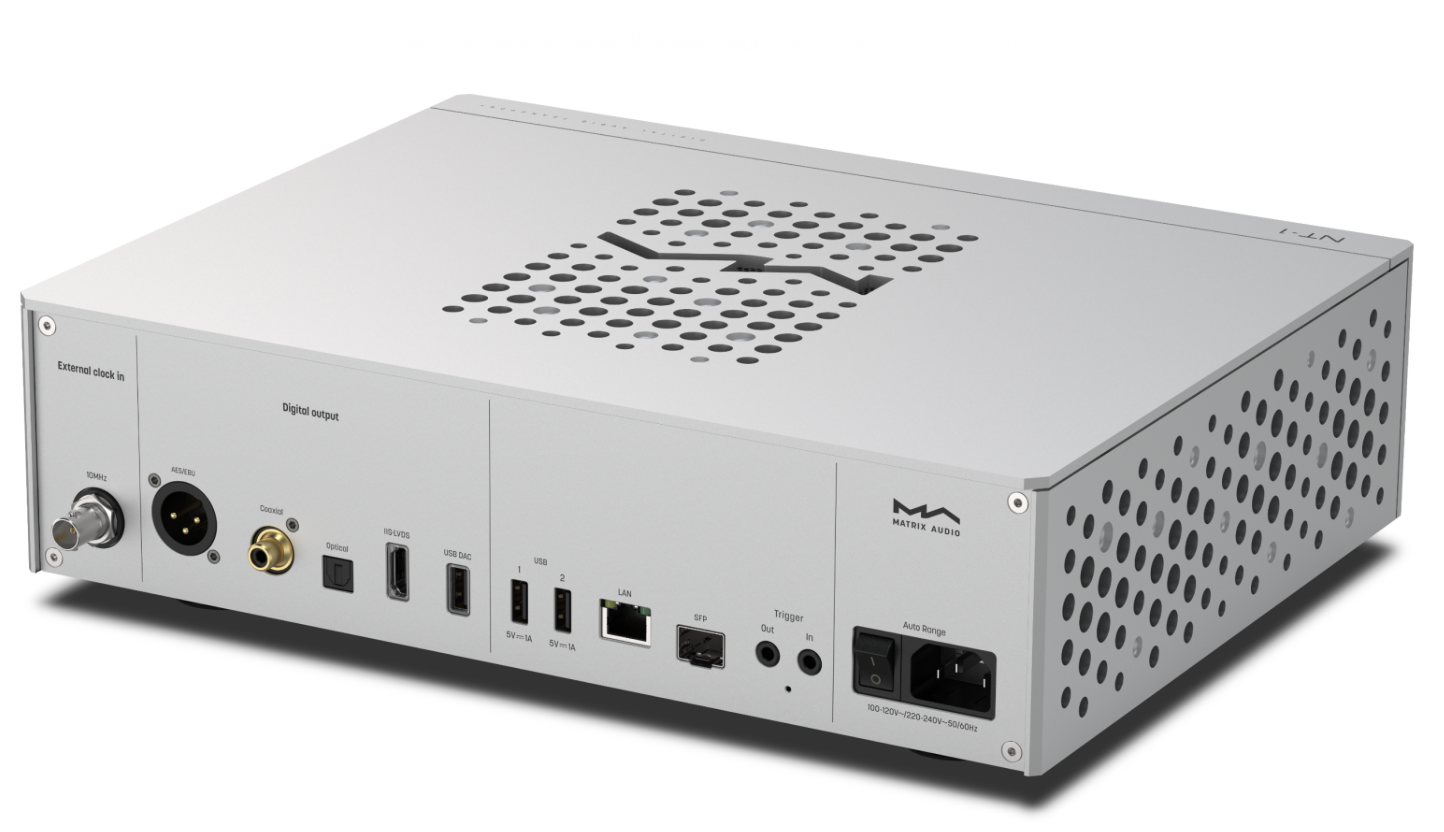
On the back of the NT-1 you will see every connection method you could desire. There is USB (optimized for a USB DAC), Optical, Coax, AES/EBU, and I2S outputs. There are also a couple of USB inputs that allow you to insert a thumb drive or external CD player for ripping to the internal SSD drive if you install one.
“Optical, coaxial, AES/EBU and IIS-LVDS (I2S) output ports are available, which can easily connect to various digital audio devices such as DACs and amplifiers to meet your diverse audio connection needs. If you connect it to an active speaker with digital input, you can also enable the digital volume function, no need to add an additional speaker controller, and the volume can be adjusted easily.”
You will also find a clock input, as the NT-1 allows you to add a high quality external clock such as the Matrix SC-1 clock, which I am testing now. Here is what Matrix says about this feature:
“This clock system derives from the flagship model of Matrix Audio, which has dual modes. In internal clock mode, the femtosecond clock provides a reference for the RF synthesizer, outputting a highly stable, low-phase-noise audio clock. In external clock mode, the incoming clock signals become the reference for the RF synthesizer, outputting an audio clock that is highly stable, low-phase-noise, and phase-synchronized with the input clock. When paired with Matrix Audio SC-1 audio-grade clock source, it can further tap into the audio performance potential of the device and move to an even higher level.”
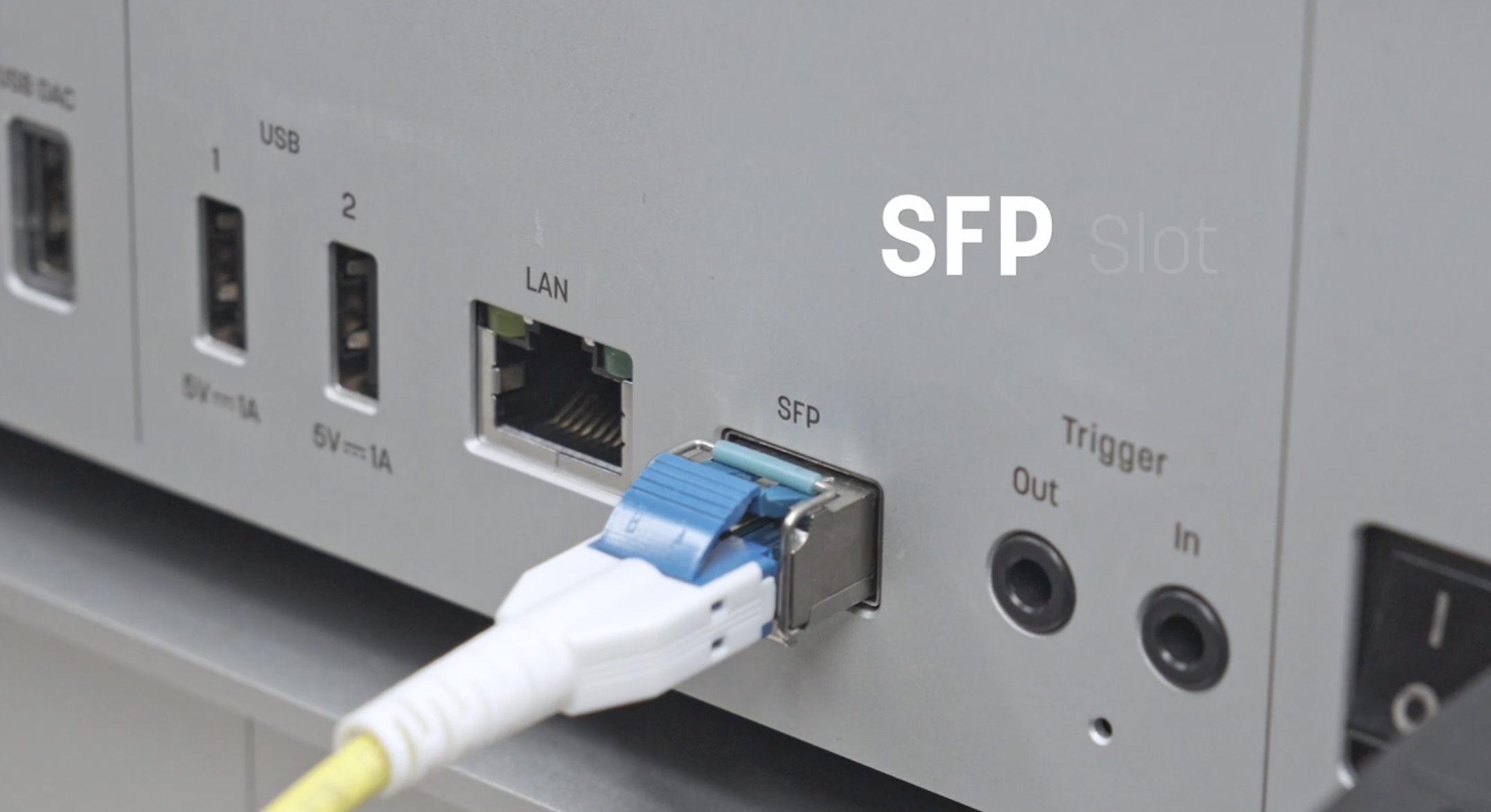
This also has SFP and LAN inputs on the back, as to be expected, and this works well with the Matrix Network Switch which I am testing now as well as a complete streaming system with the NT-1 streamer and SC-1 clock. I love that Matrix has created a way to build up a truly end-game streaming setup with all of the components you can add at any time as you upgrade. Start with the streamer, then add the clock, then the switch and they even now have something new I am testing that makes it four boxes for a world class streaming setup. I will talk about these other pieces in another review soon. Sure it is expensive, but I see many spend $50k and up for a front end, so in this regard, it’s reasonable. It’s also about how far you want to go with it and your budget.
What about the Lumin and Rose, or the T8 you loved, Steve?
When it comes to sound quality, the Eversolo T8 is less refined—so not as smooth as the others like the Matrix, Rose, and Lumin. I have detected a slight digital edge at times with it in the system when the T8 was doing the streaming, as well as a sharper yet darker sound. This is heard only with direct comparison, but once you hear this you can not unhear it. I should say, once I heard the NT-1 and then went to the T8, I couldn’t wait to put the NT-1 right back in. With this said, the T8 is an amazing value for a transport for the $1399 price tag; it is one I recommend all the time if your budget is around $1500.
Now for me, there was quite the change, but for normal folks who are not audio obsessed, well, you may not notice it as much. For me it was instantly noticeable: the NT-1 was smoother, more open, more delicate with details, and almost ethereal at times.
BTW, I have tested all outputs to a DAC with the NT-1 and my preference is the USB, which is designed specifically to go to a USB DAC. The cable I chose as the best sounding of what I had on hand is the Mad Scientist White Magic USB Cable, which is incredible and affordable. It bested a cable that cost double and triple. USB cables can be a deep rabbit hole, and somehow—yes—at this level they do make a sound difference (though slight from my experience). The White Magic brings quite the sound with the interconnects and USB, just as they describe on the website: human, emotional, full-bodied, and musical.
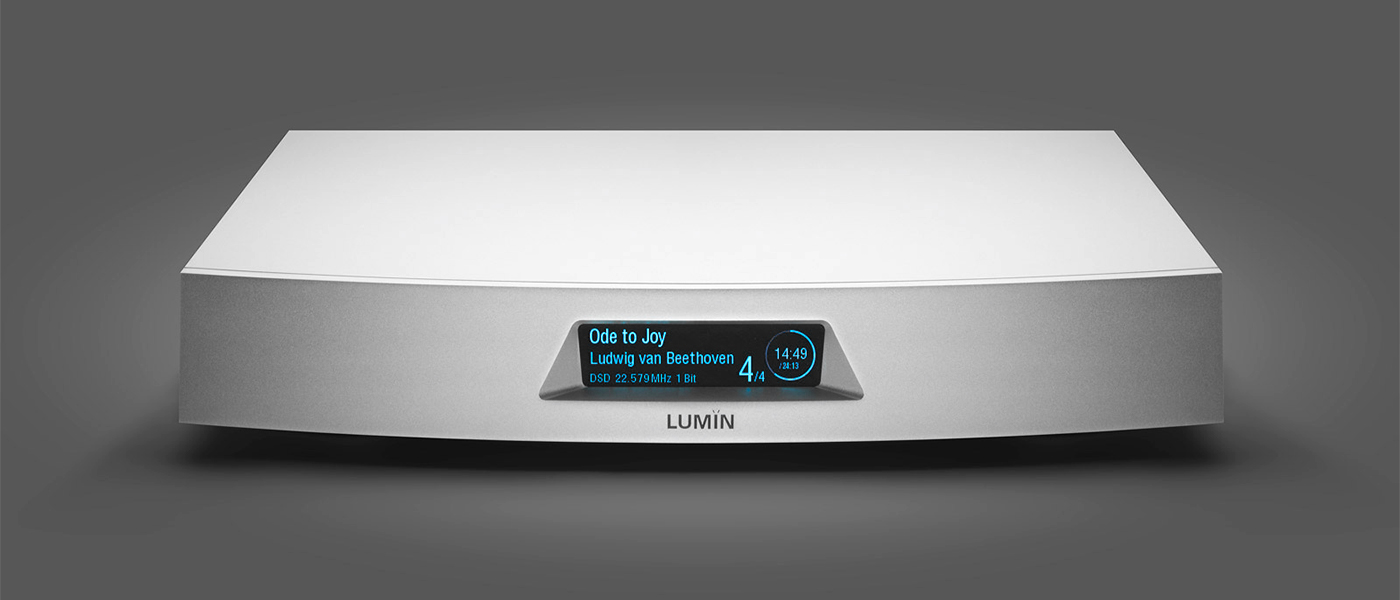
The Lumin U2 is a sexy, sleek streaming transport and one of my faves—and yes, it sounds different from the NT-1 and others. The app of the Lumin though is sort of lackluster and at the bottom of my list for being user friendly or looking nice. The design is awesome, as is the build. This thing is a tank.
Lucky for me, I have a couple of superb DACs on hand in the form of the Audio Mirror WAVE DAC and the SoulNote D2 MKII. Both of these are incredible, with sound that is out of this world, and each offer world-class performance—just differences in soundstage, detail retrieval, etc. The Wave is slightly warmer than the SoulNote, while the SoulNote is more soulful. So hard to describe, but I could be happy with either. The NT-1 into either of these sounds gorgeous.
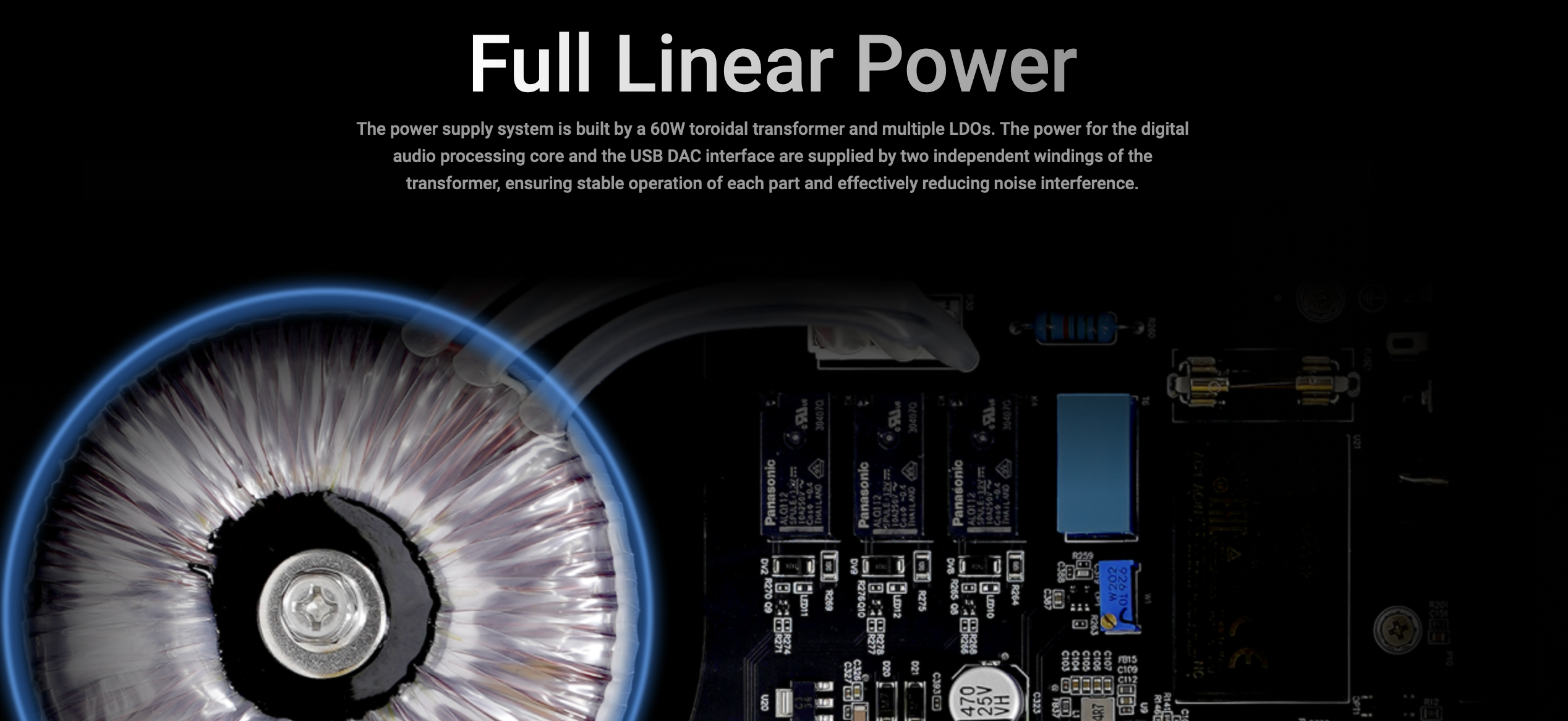
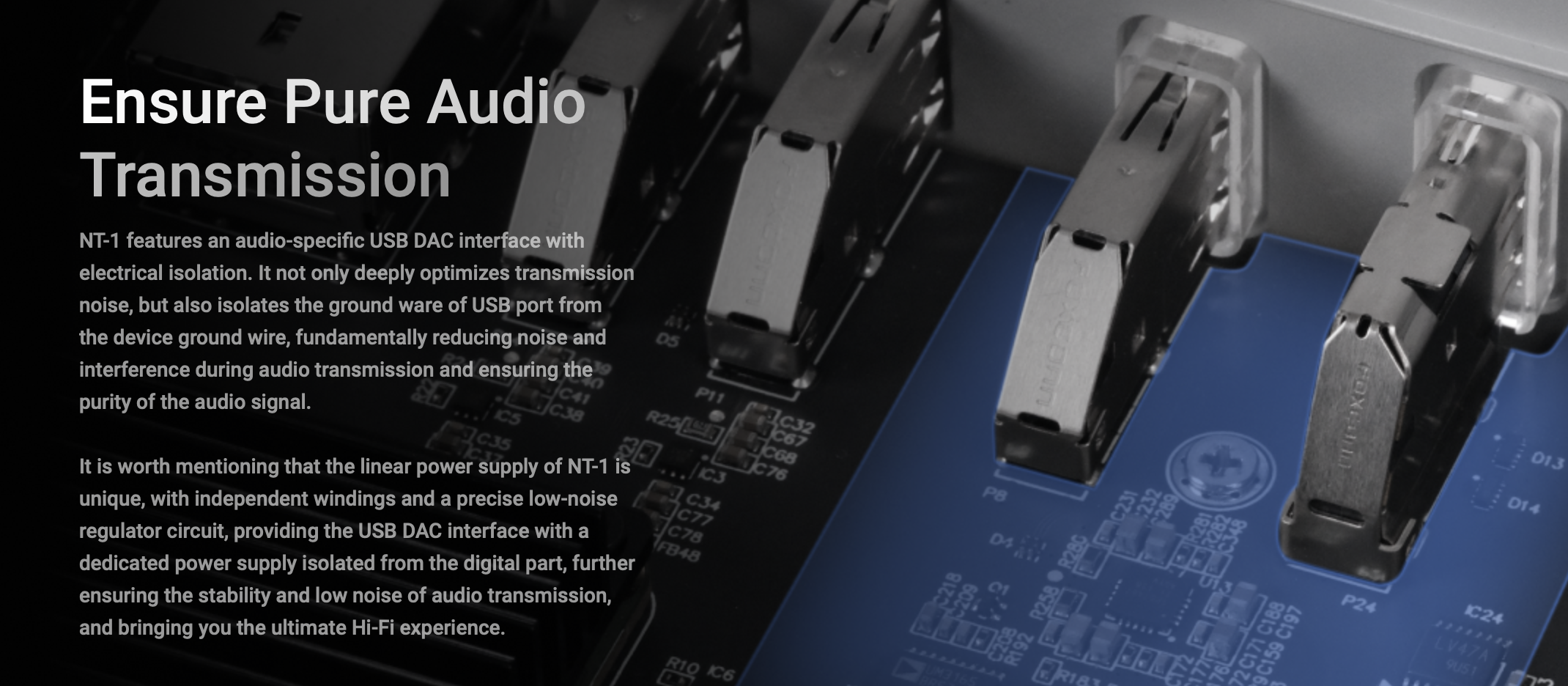
The NT-1 has a linear power supply built in. This is good. No need to add an external linear PS or “hack” the device to add one.
The NT-1 app is nice, easy to use, and I enjoy it just as much as the Eversolo, Bluesound, and Wiim apps, which are all excellent. The HiFi Rose app for me is decent, and I like the Lumin app the least, but it all works.
Since I have a Wiim, the T8, and the NT-1 here, I decided to compare them all and do so later in this review.
The sound of the NT-1 is natural, transparent, full-bodied, with some magic in the midrange and treble. The bass is fantastic and tuneful and the sound is open—but of course the DAC you connect it to will also alter the sound. Still, as a source, this is as good as I have heard feeding any DAC.
The refinement in sound is spectacular and this thing is capable of bringing a wide and tall stage with depth and 3D imaging—but done in a sweeter, more natural way than some others. The HiFi Rose, for example, is more energetic and crisp with details and a more analytical way of imaging vs the NT-1. The NT-1 sounds more effortless, free flowing, and well…more analog (but better, IMO). I love the sound of the Lumin U2 and it is more similar to the NT-1 here—yet the NT-1 costs $2k less.
For me, the NT-1 is among the best streamers I have heard when it comes to all-out sound quality, and I really love the design and smaller chassis. It’s smaller than the Rose but just as beautiful. It’s lighter than the Lumin but has more features and the display screen. I have been wanting to go back to a reference streamer for 2026 and had my pick from the Rose RS130, Lumin U2, or the Matrix NT-1.
Spoiler… I chose the Matrix as I enjoyed it the most. Also, as stated, I love that it can be upgraded with clock, switch, etc—and all look so nice together and are made to go together.
THE BOTTLENECK IS REAL
If you have a mid to high-end system and your streamer is something like a Wiim Ultra, you may be cutting your system short as the source…is very important. It is where your music starts and originates, so for the best to come from your speakers you really need a source to match the level of your system. I knew a guy who had $40k speakers, an $18k DAC, and he was using a Wiim Ultra to stream. This was his bottleneck so to speak, the one box keeping his system from reaching its full potential. He enjoyed it and assumed this was as good as digital could get for him because he heard streamers and DACs did not matter—yet he splurged $15k for cables (which also matter in high-end systems).
After I spoke to him he went out and picked up a $6k streamer, a Lumin U2. He then called me with a big thanks. He said it was a transformative move and he then gave his Wiim to his son who had a small system in his room. He could not believe what he was hearing and I said, “See—now you can hear what your system is capable of.” He is happy now, but even he used to think streamers and DACs all sounded the same because he read it somewhere online where they do not listen to gear—they just “measure” it—and my friends, measurements will never tell you how a piece sounds. In any case, now he wants the NT-1, lol.
A transport vs an all-in-one is something for those who really want to be able to change out their DAC. And while you can use an all-in-one as a transport, those are filled with so many things—chips, wires, and modules—that are meant to all work together with the DAC. Usually the streamer, while always very good, can be improved with a dedicated machine that was purpose built as a streamer only—just as a CD transport and external DAC will be better in sound than a CD player with a built-in DAC.
A great transport is what will deliver the digital bits to your DAC, and that DAC will then convert it all to analog and send it to your amp for your speakers to make music with. Bottom line: a dedicated transport will almost always be of better quality than an all-in-one when it comes to the streaming part—and usually the build as well. It’s what it is made for and has one sole purpose. This also goes for CD transports vs players.
The Enemy of Digital Streaming
The enemy of streaming is noise and jitter. I like no grunge, no edge—smooth and refined, plenty of detail, and a huge wide, deep, and tall stage. This comes when gear is really great at removing all noise, even noise you can not hear. I love immersion, beauty, hearing the reverb trails in recordings easily, with background details being brought forth and heard more easily. All traits of a superb streaming setup for those audio geeks like me who strive for better. Refinement, silence, zero grit or shine. I get all of this with the NT-1 and the DACs I am testing it with.
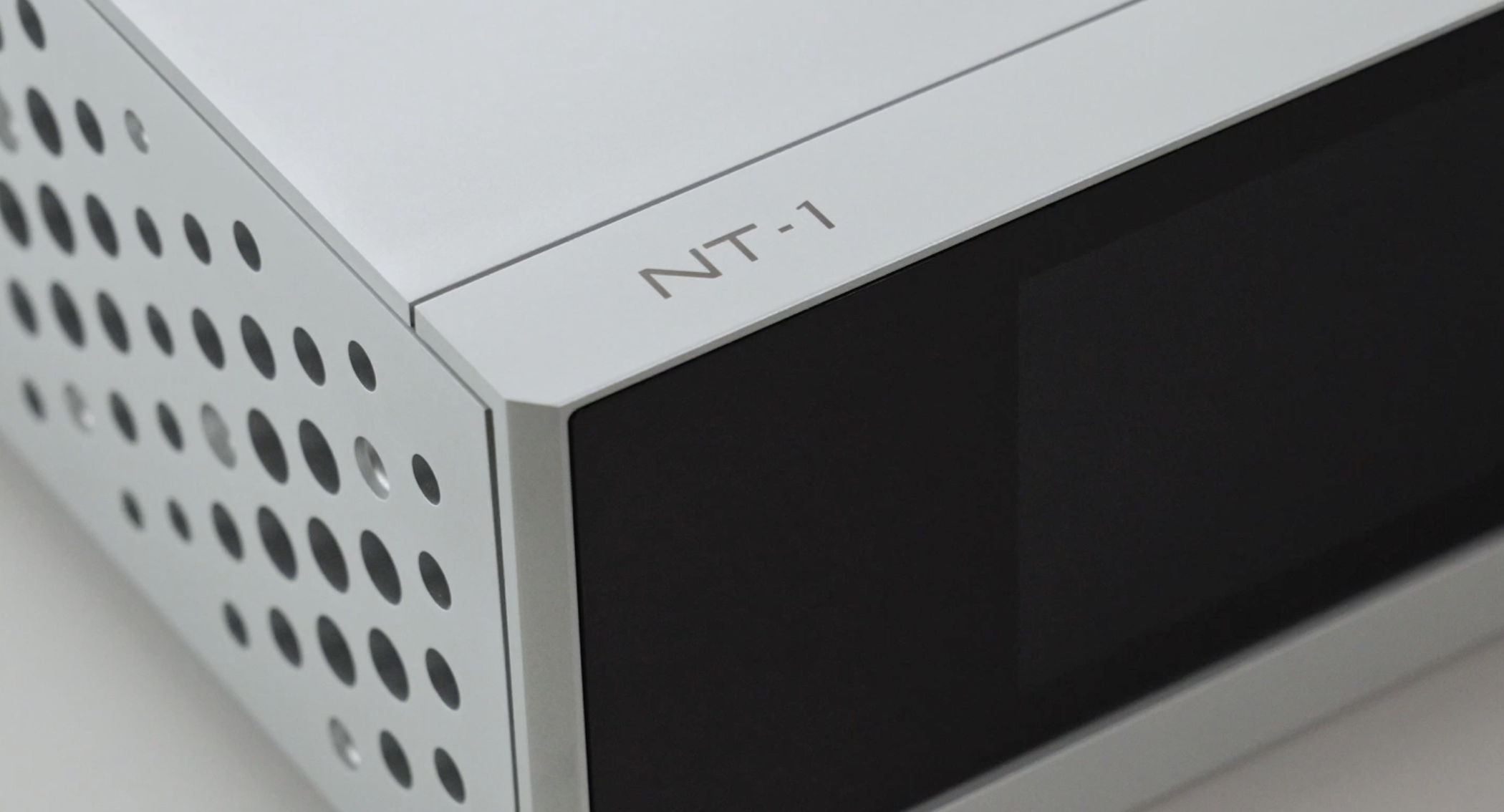
Matrix calls their NT-1 a “Streaming Masterpiece”, and while they also offer the half-priced TT-1 streaming transport, the NT-1 is the flagship and offers a bit more than the TT-1 and this will also come across in the refinement of sound. I’d say the TT-1 at $1999 would compete with the Eversolo T8, where the NT-1 competes with the Lumin U2 and Rose RS130.
The TT-1 does not have a linear power supply (switching) or clock input, or a noise-reducing USB output dedicated for USB DAC use, and the TT-1 allows for Wi-Fi or network connection. The NT-1 allows for wired connection only—no Wi-Fi. This is purely for best stability and even SQ IMO. If none of this matters to you then you can be 100% happy with the TT-1, but if you are like me and seek the ultimate in digital sound or upgrading later on with the clock, jumping to the NT-1 would be a good idea if you can swing it. This will save you from selling the TT-1, losing money, and then buying the NT-1 later.
BTW, the NT-1 is silent in operation—so no buzzes or noises in operation. It also cuts noise, which is the enemy of digital streaming.
The NT-1 has all of the features we seek in a high-end streamer and nothing we do not need or want. There are no gimmicks here—no fluff, no added flash to attract us in that way. Instead, Matrix built the NT-1 to appeal to those who just want the all-out best performance, so you will not find 10 VU meters here—just one—and it’s a natural, more realistic looking meter. You will not find tons of buttons to touch on the gorgeous display screen. Just what we need and nothing more. I love this, and the looks of the NT-1 are beautiful, classy, and well…for me, easily bests the black basic look of the T8. But of course tastes will vary.
The NT-1 with the SC-1 clock showing the one sole VU meter that looks very nice and super realistic. Of course you can also choose to display the album art if you like. The large display is gorgeous.
I also love the classy small power and standby button at the bottom left side of the unit. Push to place into standby, and again to turn it on. It takes about 20 seconds to boot up.
Testing the Trio – Wiim Ultra, Eversolo T8 and Matrix NT-1
I will be blunt here in my evaluations as I feel honesty is the way to be, but keep in mind this is based on my ears and my room, so your tastes may vary. What I love maybe you will not. Always audition if you can.
Speakers used for this evaluation are the incredible German-made T+A Talis R330 speakers, a Vinshine Dazzle integrated amp, and Audio Mirror Wave DAC. I also have the SoulNote A2 MKII integrated and D2 MKII DAC. Also Nordost Valhalla (The OG) speaker cables and Mad Scientist White Magic interconnects (which are sublime). This setup WILL show me the differences, if any, between these streamers. I also listened with the Fleetwood Sound Helios speakers which I am in love with. Finally the Starke Sound Halo M1 which are also in house for review.
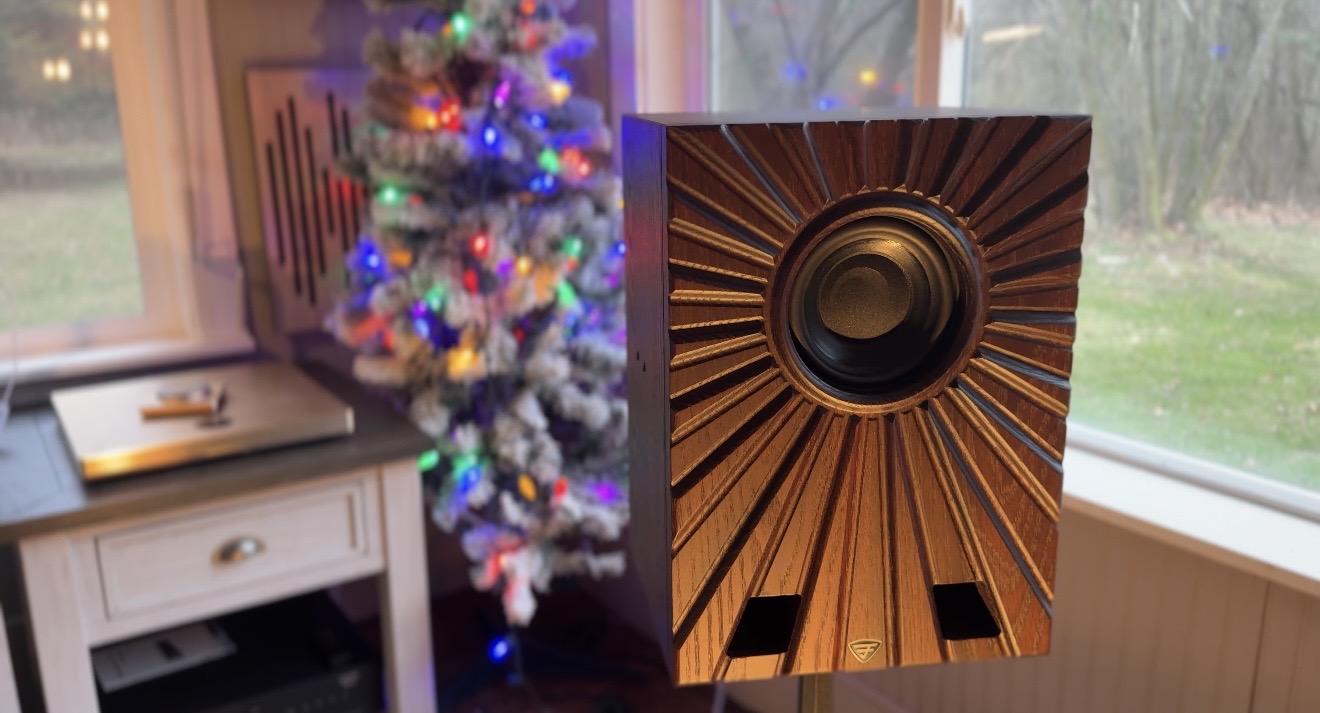
The Unique and lovely Fleetwood Sound Helios
First Up the Wiim Ultra – $329 at Amazon HERE
The Wiim is an amazing value for what it does, full stop. At just $329 it is a streamer with a DAC and a display that shows album art, and it also serves as a preamp. If I have to be brutally honest here, the build shows it as a $329 product. My first Ultra broke as the RCA in on the back is very cheap and not well seated. I pushed in my el cheap-o RCA cable for a 3rd time testing three cables, and it collapsed in. Never had any audio product do this. So while it is $329, it is made with cheaper parts it seems. It looks cool, nice, and presentable, and it does work well. As is, the Wiim is a superb buy for those getting into audio or streaming. It will show you the ropes and let you know if streaming is something you want to seriously delve into. For some, the Wiim is all you will ever need. I will say that my second Ultra has not had issues.
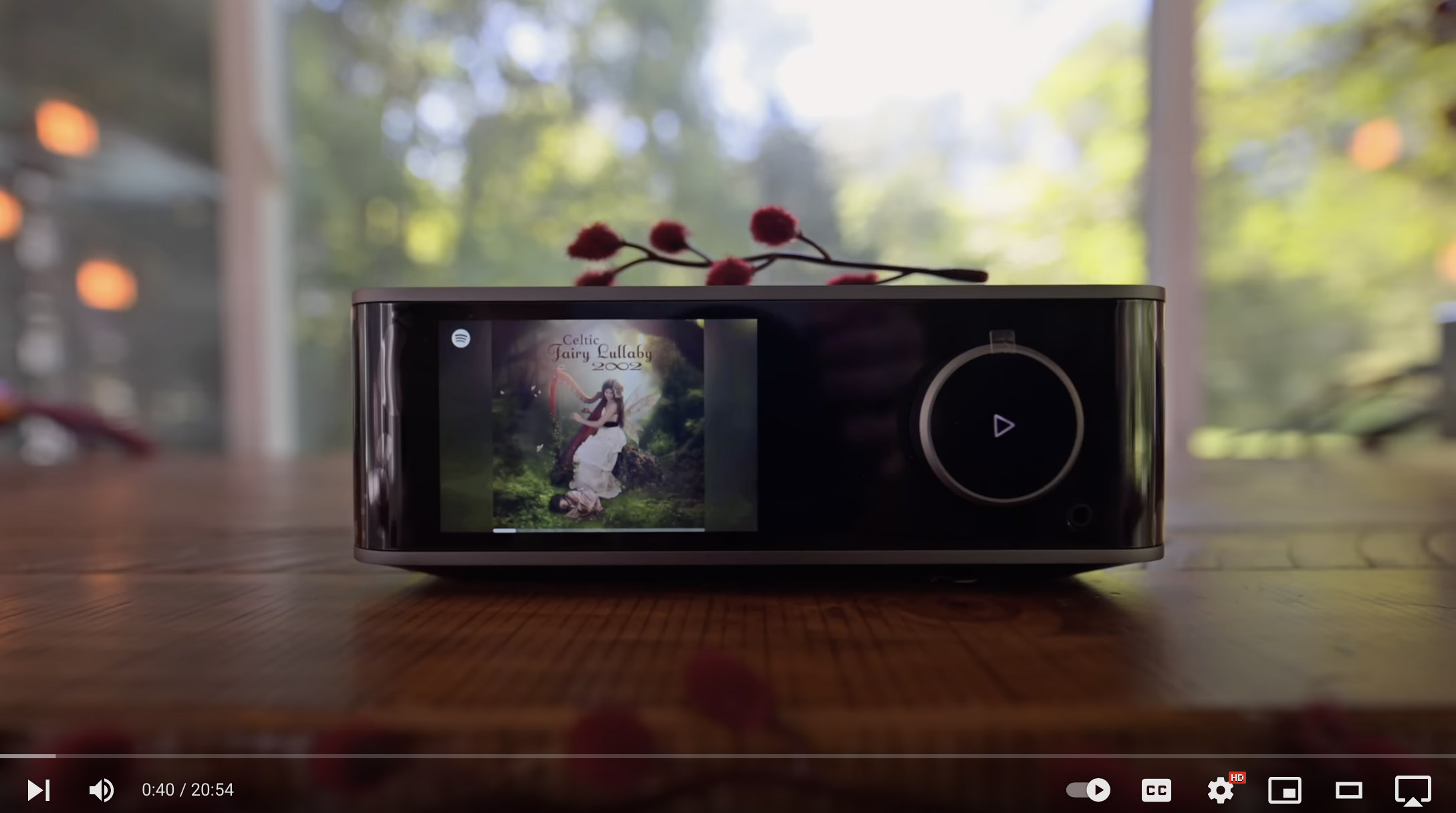
When I inserted the Wiim into the setup I opened TIDAL and played some tunes from my playlist (which you can see here). I was mainly using it as a streamer, as that is what I am doing today. I did test it briefly with the internal DAC just to see what would happen.
I tested with two tracks: Agnes Obel “Frozen” and “O Death” from Bobby Bass.
With internal DAC and with Agnes Obel, I heard her voice come through in a warmer and, well, flatter way than I am used to. There was very little height or depth to the stage, as it was more flat and wide, but there were some moments of awesome in there when the music swells a bit. Overall it sounded pleasing, but the bass was not what I was used to hearing either. It was melded into the music as a whole much like the instruments—sort of one note. Details were also more melded together vs separated cleanly. The music sounded very musical and very good, especially for what the Ultra costs.
Going into the Wave Tube DAC, things livened up dramatically. I heard some height and instruments were now more cleanly separated, but the sound was still flatter and more one-dimensional than what I was used to hearing. Still, very, very good.
With “O Death” I heard a very similar vibe: warmer, softer details, but pleasing and enjoyable nonetheless. Most could be happy with just this piece and it has its place. I would say avoid the Wiim if you have a higher-end setup, as it can be the bottleneck. For starter systems, this thing would be amazing—and is. Just do not expect it to last years in the build quality, especially if you swap cables often.

Switching to the Eversolo T8 things changed for the better. Buy it HERE for $1399.
Seeing that the T8 is a streaming transport without a DAC, it is a more suitable comparison to the Matrix NT-1. With the same music going into the Audio Mirror WAVE DAC, the sound became much more dynamic, alive, clear, and open vs the Wiim. Details were now jetting out in a semi-3D space and while at times I was hearing a little edge to the sound, overall it was superb and I preferred this sound to the Wiim.
Going into the SoulNote D2 MKII DAC, the sound was more open and transparent—slightly. Less solidity in the mids and the details did not jet out as much as with the Audio Mirror, but the sound was “airier”.
The T8 does detail in a way that allows us to hear it all, if your DAC is up to that task. Very open and can throw a tall, wide, and deep stage. The tonality is neutral to a shade dark with some crispness in the treble. Agnes Obel’s voice came through so cleanly and real. The T8 performs well via its app as well without glitches, and the Eversolo app is quite nice indeed—one of the best.

I wondered how in the world the $3999 NT-1 could best the $1400 T8 and be worth an extra $2600 USD. With “O Death”, this track has some amazing bass and imaging with the vocals. With the T8 and Wave it was an experience when turned up loud with the T+A Talis R330 speakers, which are really pretty much full range. Big sound, big depth. Nothing to complain about.
Now the NT-1 goes in – Buy it HERE for $3999
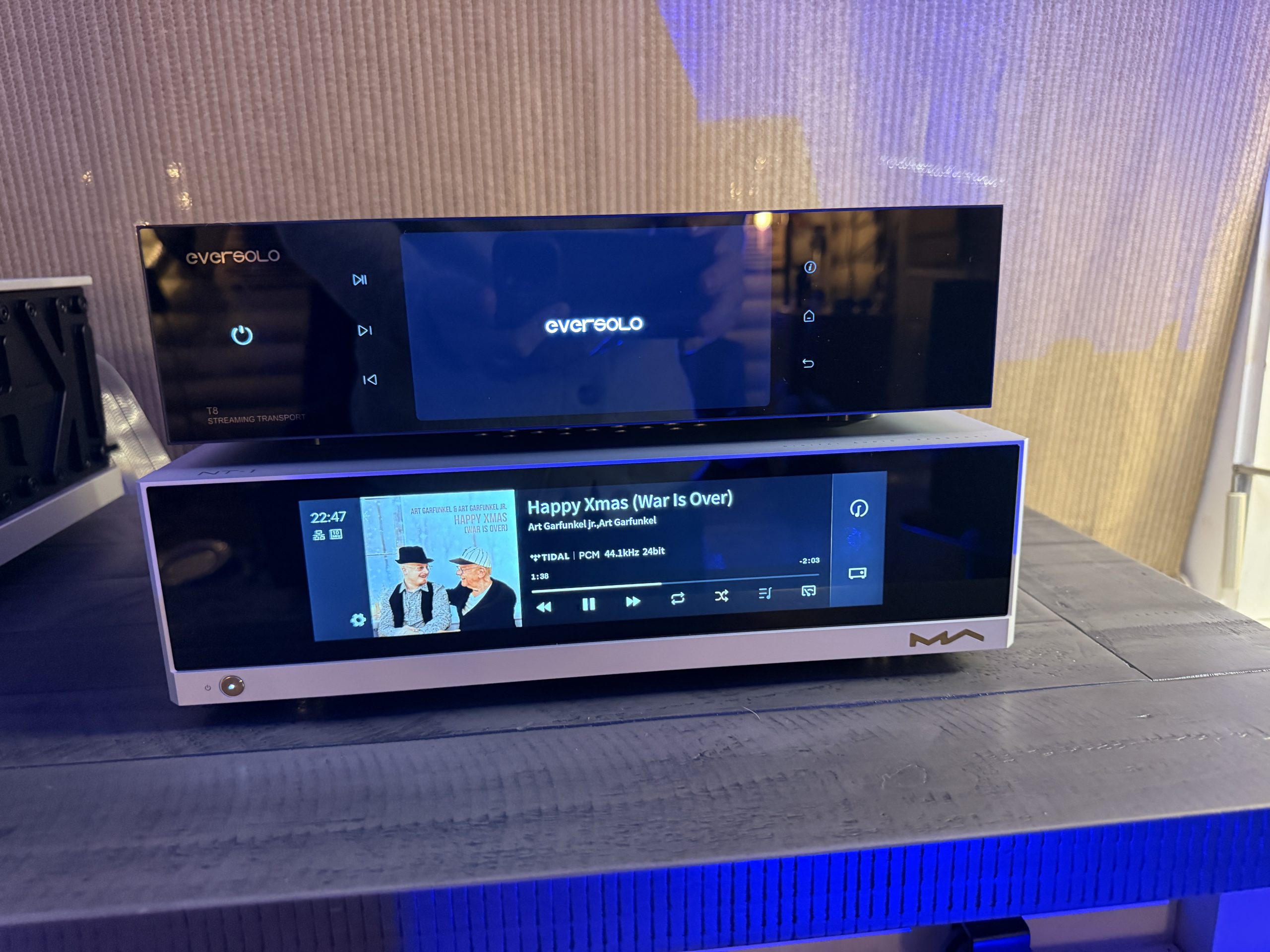
When I placed the Matrix NT-1 in, I immediately heard a difference from the T8 and it was pretty spectacular. As good as the T8 is, the NT-1 presented the music in a richer way—a more evolved way—as well as more open and deep. It was as if there were many layers going on, and while not throwing as tall of a stage as the T8 for some reason, it was for sure more textured and layered and had more dimensionality to it. Imaging was less analytical than the T8 and more natural, yet still rather special. I was hearing some extra body as well and again, a more 3D soundstage that was more fluid—without any edge at all—yet resolution was high. It all sounded complete. Whether I used the Audio Mirror DAC or the SoulNote, the sound was gorgeous: well mannered, clean, and open—yet rich and with body.
With the Wave DAC, the sound of the NT-1 was less aggressive than when the T8 was serving the tunes. I liked both, but ultimately preferred the way the NT-1 was doing things as it was just more right sounding to me. More musical and more involved. More soul stirring. Then again, that $1399 T8 is priced so right and even comes with a metal remote where the Matrix does not come with one at all. Hmmm.
I also tested the NT-1 with the $849 LAIV Verse DAC and yet again, beautiful sound that was a bit warm, fluid, and musical. A big dollar DAC is not needed to hear what the NT-1 can do, but if you do go to a high-end DAC, the NT-1 can scale to great heights.

The Agnes Obel song gave me goosebumps the first time hearing it on the NT-1 with the SoulNote DAC. So yes, I was hearing the price difference in sound quality here—very much so. At this moment I knew this was the perfect streamer for my system that I have ever so carefully assembled for 2026.
While the T8 was not really a bottleneck here as it sounded great as well, the NT-1 just provided that extra like what I hear in the high-end streamers. I would say the NT-1 easily sits with the Lumin and may even surpass my old fave the HiFi Rose RS130 in sound quality for my likes. While the NT-1 build is lighter in weight and smaller vs the Rose, the sound seems a bit more textured and refined still.
CONS of the NT-1? Just two for me, but maybe not for you. Oh and this…
Yes, there is a con or two here—at least for me. I wish it came with a remote like the T8 and Rose units do, and at $4k it should. When I use a streamer I like to throw on a playlist or even random songs, and I like to skip some at times. Rather than using my phone and draining my battery more and more, I prefer a remote to skip tracks. The Eversolo comes with a nice metal remote and the NT-1 comes with no remote. I do not even see an option to buy one, but maybe there is. There should be, as not everyone likes to use the phone as a remote. So at this price I would have expected a remote to be included.
Also, I cannot for the life of me get the clock (as in the time of day) to show time in a normal way vs a military-style 24 hour way. There is no option in the app to do this or anywhere. So the time displays when the streamer sleeps as 24-hour time. I asked about this and was told this is just how it is.
Also, when using Spotify Connect I have had it drop connection three times mid song. No idea why. I have to turn it off and on again to reconnect. This is only when using the Spotify app and using the Connect feature. BTW, Spotify sounds amazing on the NT-1, so it’s one of the good ones for this.
The PROS of the Matrix NT-1
There are so many pros. The design is super nice, the build is exquisite, the sound quality is supremely great, and the app is nice and easily learned. The NT-1 brings all of the things we want in an audiophile-level streamer with every input we crave, SSD drive, etc. What I love most besides all of this is the fact that when I can afford it I can make it better without selling the NT-1 for something else that is supposed to be “better”. I can add the SC-1 clock (testing now and yes, it improves things in an interesting way), the SS1 Pro network switch (the enemy of great streaming is noise and this just cuts it), and even the new box I am checking out that seems perfect within the setup.
I can build up my streaming setup to be as good as it gets with the streaming source as time goes on, or if one has the cash, all at once. I will say now that the clock and switch are well worth it to pair to the NT-1 if you seek perfection in your digital setup. They were designed to go together and they do so like peanut butter and jelly.
The display here is beautiful as well. The box is not super heavy and it all just works so well—sounds so beautifully refined and magical when going into the Audio Mirror Wave Tube DAC or SoulNote D2 MKII DAC. This NT-1 is meant for higher-end setups and systems, and just as I wouldn’t use a Wiim in a $75k system for my source, I wouldn’t use the NT-1 in a $3k system 😉 Synergy is key here.
All in all, I thought this streamer was too expensive when I saw images of it online. When I received it for review and installed it, I no longer felt this way. It’s a beautiful little box, but the beauty here is more than skin deep.
Conclusion
The Matrix NT-1 is the first streamer to really surpass my favorites—for me—in overall use, looks, and sound quality. I feel the Matrix hits a sweet spot as an ultimate audiophile streaming transport (without going into insane-money territory). And while it is smaller, lighter, and yes, made in China at a $4k price point, it does its job with pure class and sound quality. Yea, you can get better still, but expect to pay over $10k to do so, and then we are looking at serious diminishing returns. For me, after adding the clock and switch, I could not ask for more when it comes to the quality of my digital streaming.
The NT-1 for me easily bested the Eversolo T8 in design, build, and looks—as well as sound—but the T8 also sounds excellent: just a shade darker, a bit sharper, and a little flatter, yet it is $1400 vs $4k. It doesn’t bring the all-out refinement and dimensionality of the NT-1 and this is crazy as they all do the same thing on paper. It’s all in the engineering and design though, and while I speak of these improvements, do know that I hear these things in a high-end setup with a high-end DAC and wonderful speakers.
With the NT-1 I have the ultimate in refinement for my streaming, and paired with a fine DAC of your choice it can be sublime as can be—without grit, grime, shine, edge, hardness, or the old usual digital suspects showing up. Oh, the NT-1 is also dead quiet in operation, meaning no noise from the unit or your speakers. The noise floor is crazy low. The NT-1 stirred the soul indeed.
Soon I will talk about the SC-1 Clock and SS1 Pro switch as these pieces are in now with the NT-1 and yes indeed they make it even better!

Read more about the NT-1 here at the Matrix Website
You can buy an NT-1 from site sponsor Dedicated Audio HERE.